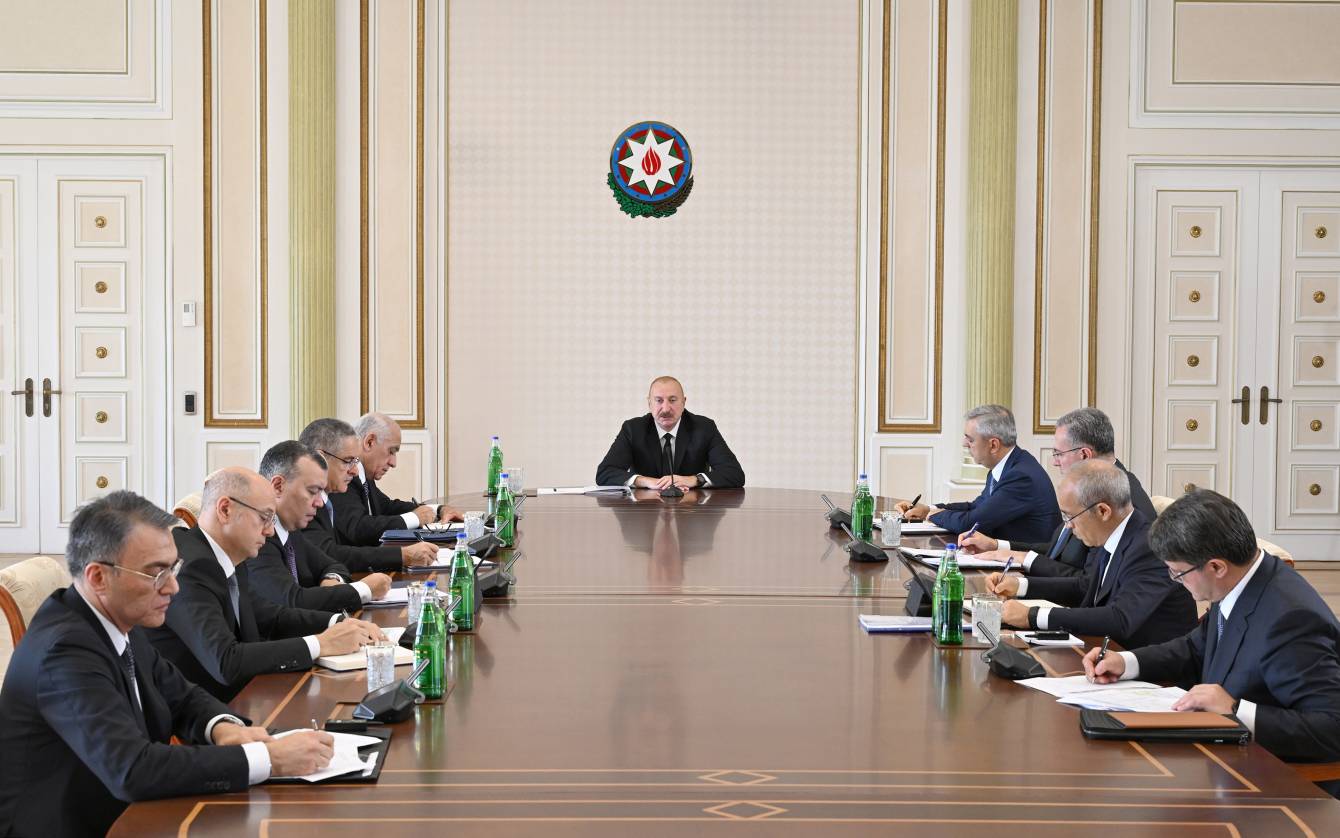
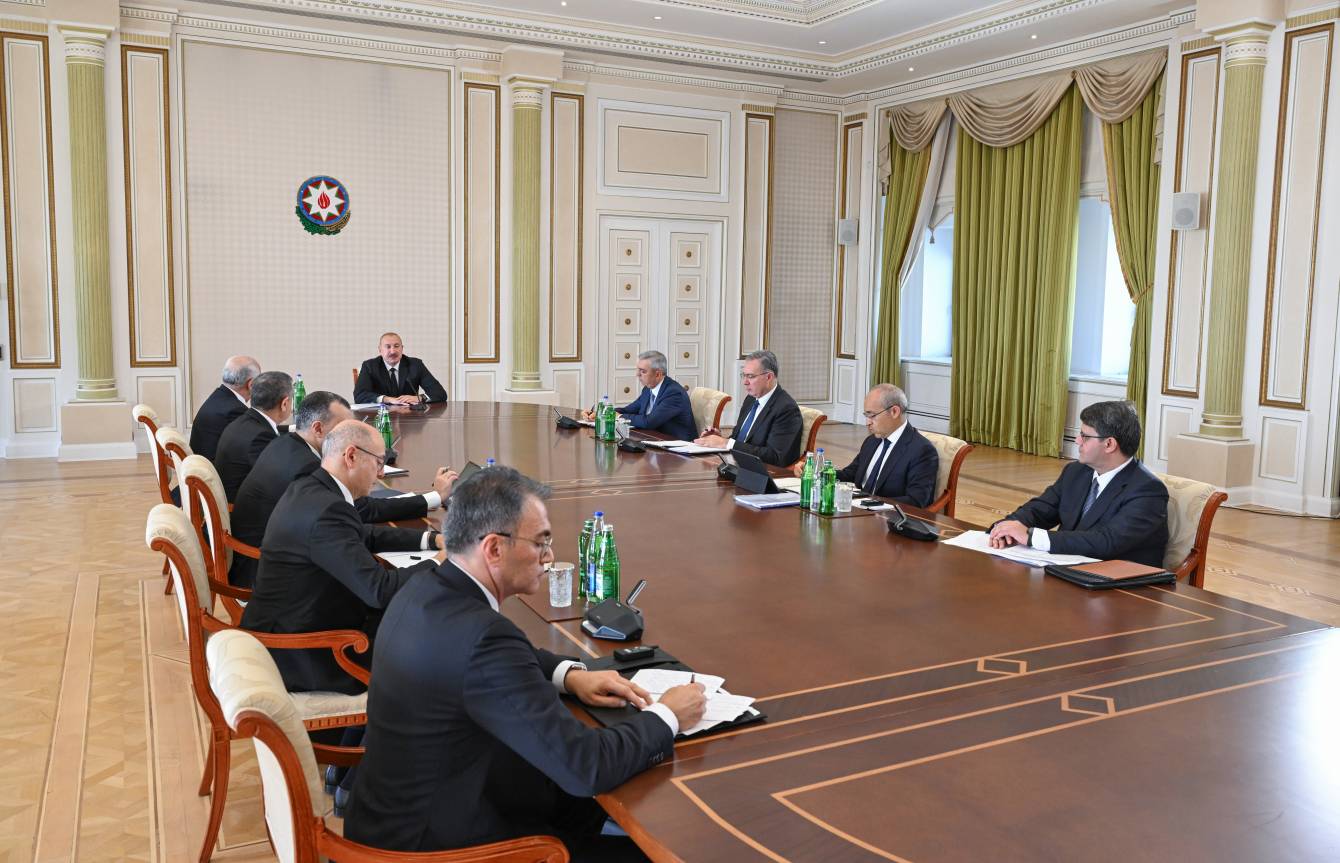
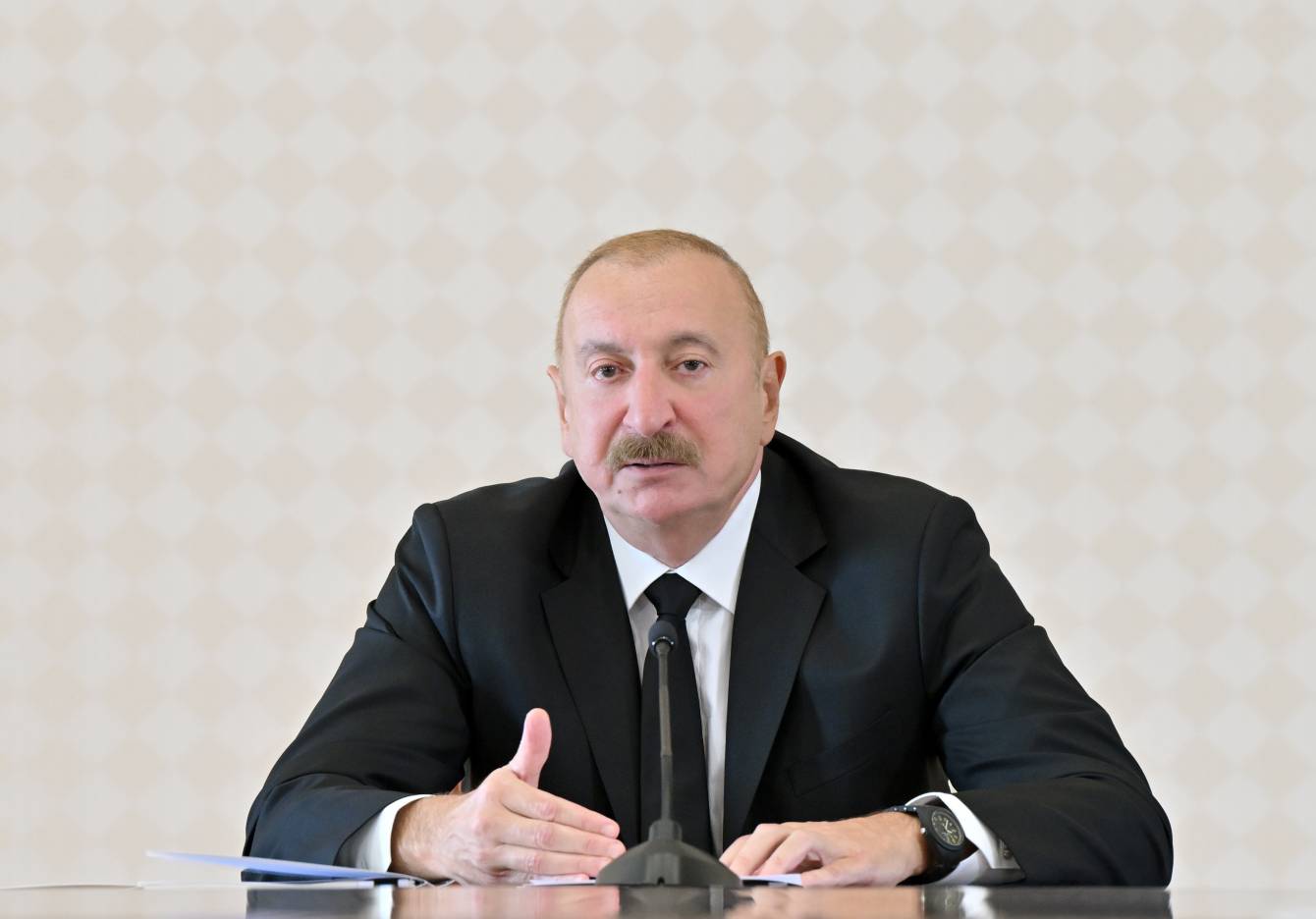
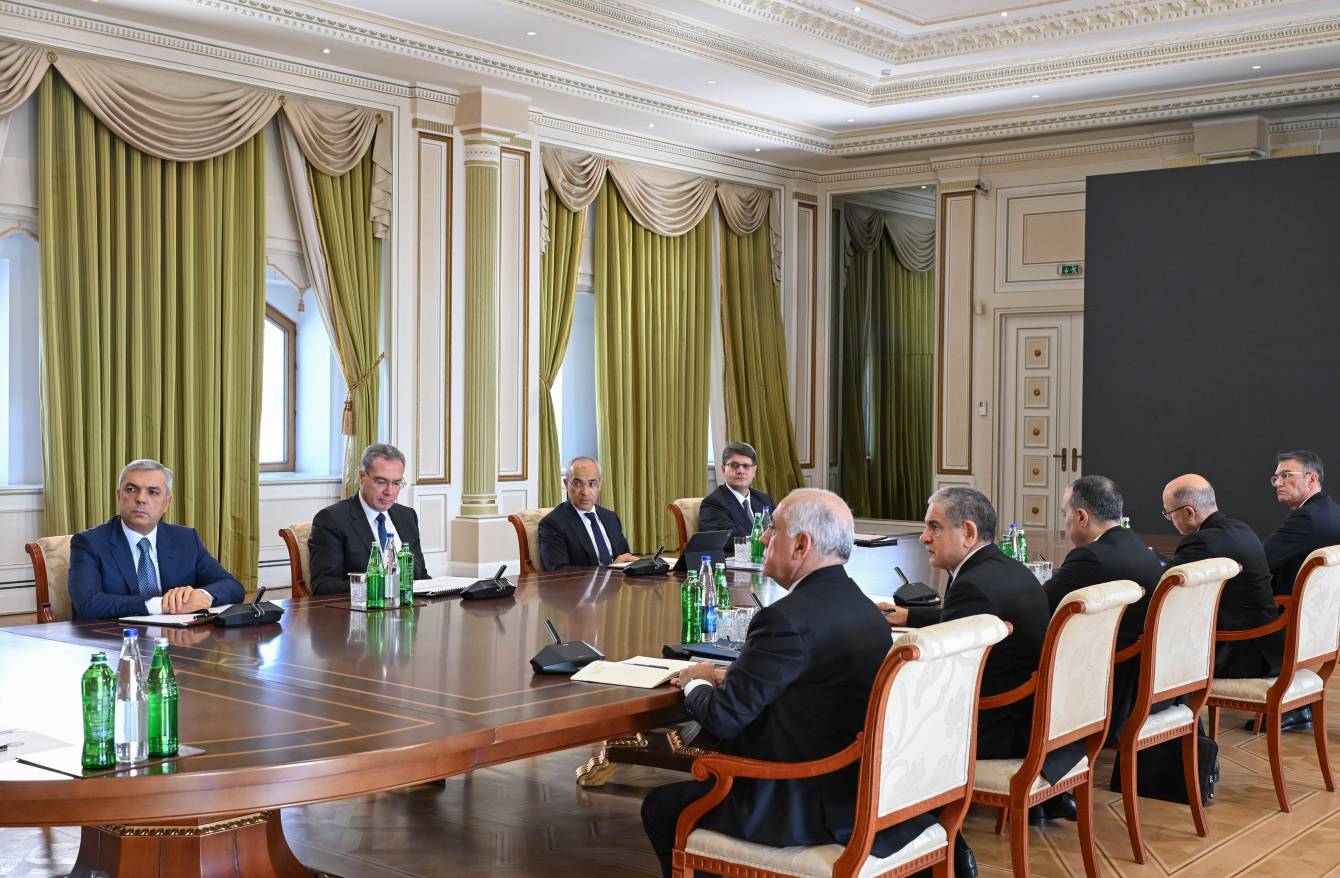
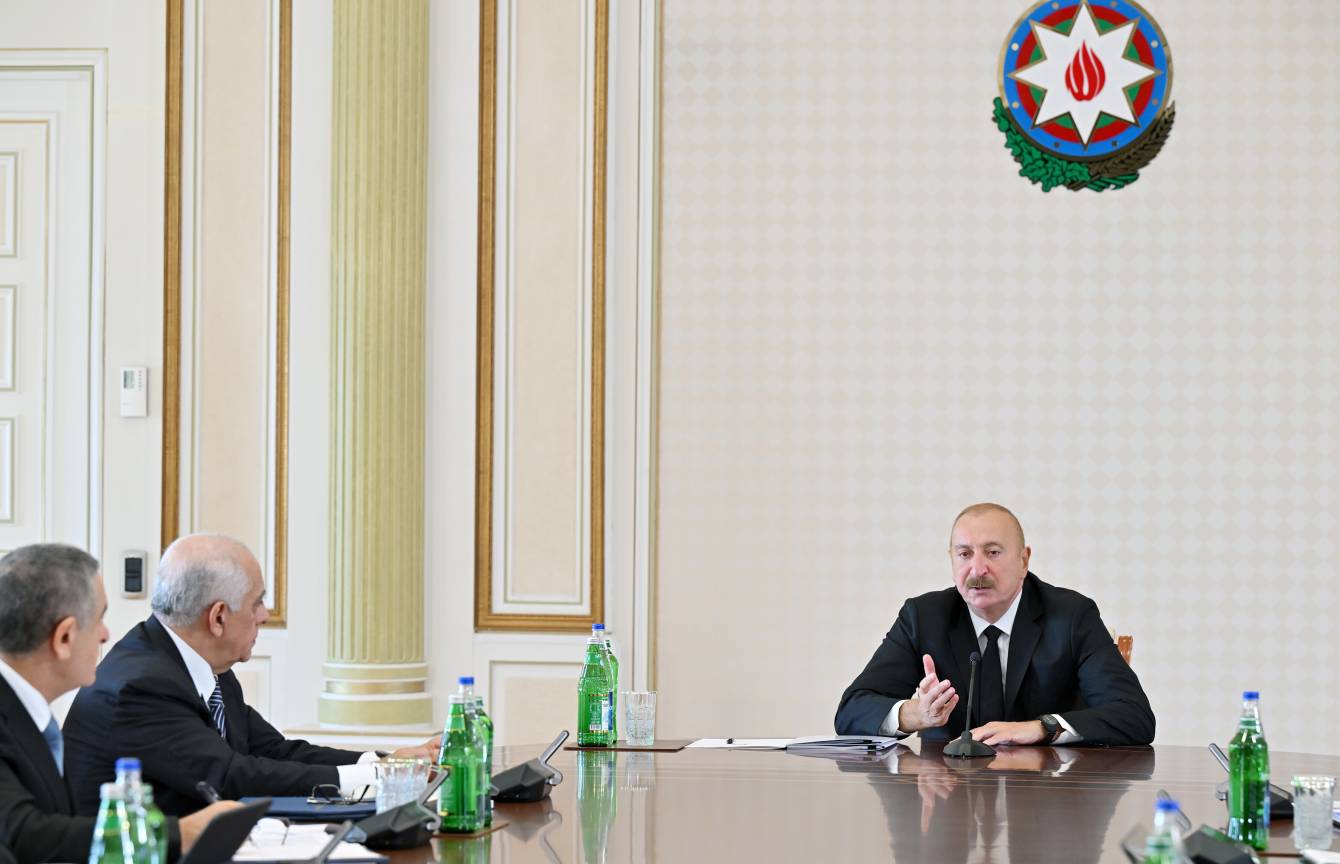
President Ilham Aliyev chaired meeting on State Program for development of mining and metallurgical industry
22.09.2026
15:30
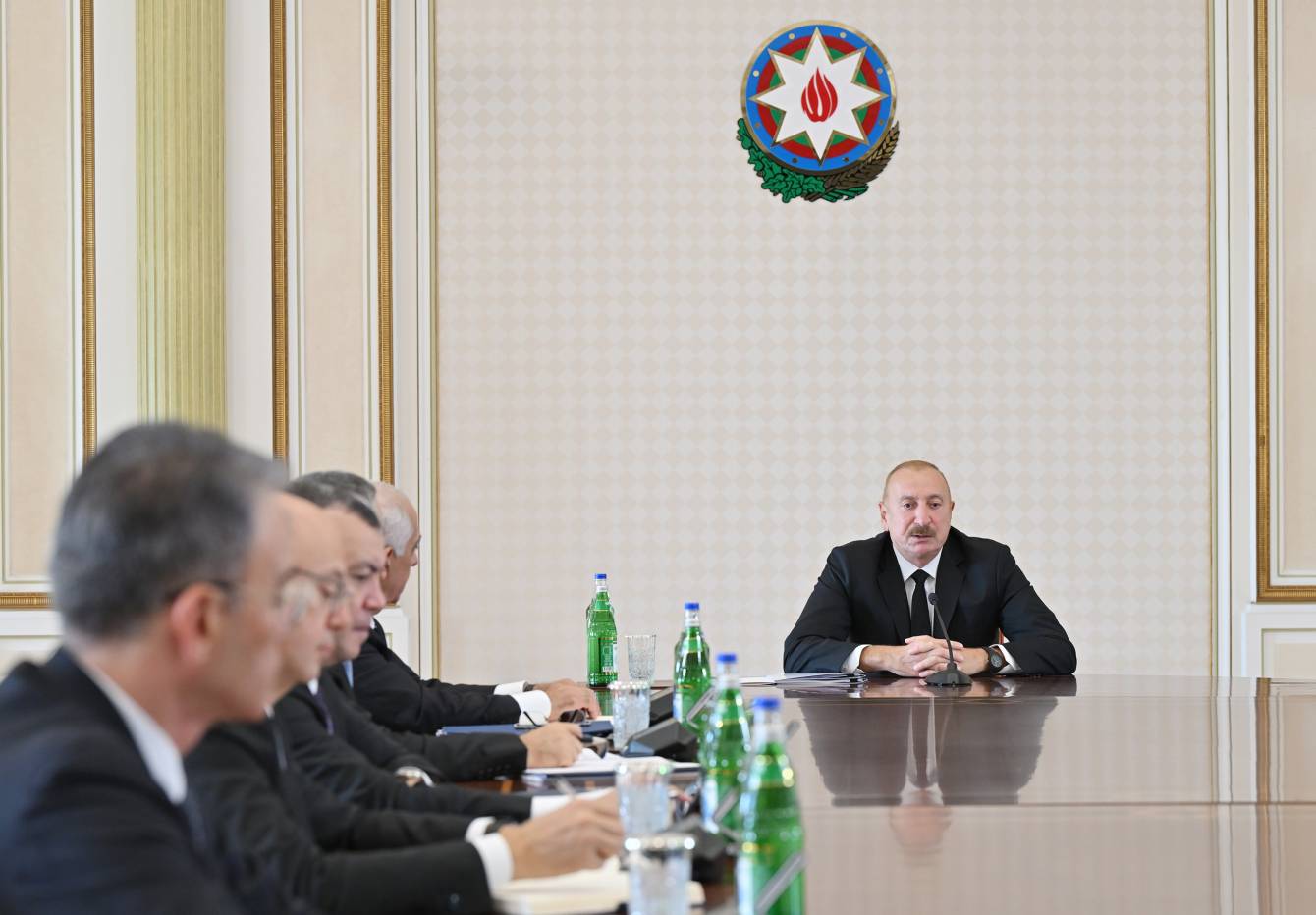
On September 22, President of the Republic of Azerbaijan Ilham Aliyev chaired a meeting dedicated to the “State Program on the Development of Mining (Metal Ores) and Metallurgical Industry in the Republic of Azerbaijan for 2027–2030.”
The head of state delivered a speech at the event.
Speech by President Ilham Aliyev
- The State Program on the development of the mining and metallurgical industry, a highly promising sector for the national economy, will be presented to us today. To prepare the program, I signed a relevant Order a short while ago—at the beginning of April. Preparatory work on the program has been carried out over these months. This program will be presented to us and to the Azerbaijani public today.
This sector is of great importance for the country's economy, particularly for the development of our non-oil sector, and is a very promising field. Although it is a capital-intensive sector, a new, modern industrial domain will be established in our country. The creation of over 5,000 permanent jobs is envisaged. Overall, the processing and efficient utilization of our natural resources, alongside the full establishment of the production chain, will strengthen the national economy.
I can say that several State Programs have been adopted recently. All adopted programs are highly specific and short-term, with sufficient funds allocated both in the state budget for the coming years and in the investment program to achieve the ultimate goal. At the same time, the execution and monitoring mechanisms for these programs are fully in place.
Among the adopted programs, I would first and foremost highlight three main directions, although more programs have been adopted. State programs regarding agriculture, transport, and water management—which covers both irrigation and the water supply of Baku and the Absheron Peninsula—naturally require substantial financial resources. However, these programs will strengthen the national economy while simultaneously enhancing the social well-being of our citizens and providing them with modern infrastructure.
As I noted, the adopted programs are short-term and must be implemented by the end of 2030. It is true that the water program requires more time. However, the Program on the development of the mining and metallurgical industry must be implemented in just four years—fully executed between 2027 and 2030. This new program to be adopted also reflects our agenda regarding the socio-economic development of the regions.
As you know, several State Programs on the socio-economic development of Azerbaijan's regions have been adopted. The first Program was adopted in early 2004. In fact, it was the most significant program adopted following the presidential election held in 2003. Subsequently, several five-year programs were adopted, and key infrastructure projects were effectively implemented in the regions. It is true that the execution of these projects continues today because the population is growing, employment is increasing, and the economy is expanding. Therefore, these programs are not static; additions must continually be made, and the development of the regions holds a special place in the annual state investment programs we adopt.
I want to emphasize once again that the work accomplished over these 20 years enabled us to execute our main infrastructure projects. At that time, we imported both natural gas and electricity from abroad, as our own capabilities were severely limited. Today, however, the level of gasification in our country stands at 96 percent, and we export more than 25 billion cubic meters of gas. Domestic demand is many times lower than this figure. We resolved all issues related to electricity and created a very robust potential. Today, our reserve generating capacities are quite substantial. Certain volumes are also exported, but in the coming years, this export will become large-scale—especially considering that there is great concern and a shortage in global markets regarding energy resources, including electricity, fuel, and natural gas—all essential products that ensure energy security. In short, the global picture is right before our eyes. Therefore, the timely steps we took protected us from major problems. Imagine if we had not done this. We could have found ourselves in a very difficult situation today, forced to go door-to-door like some countries, begging and pleading with others to secure our energy security.
Today, however, the picture is completely different. We receive numerous appeals and naturally assist within our capabilities, and we will continue to do so. Naturally, both our role and prestige are rising, and all our partners see how far Azerbaijan has advanced and how much stronger it has grown in recent years—so much so that today it not only fully satisfies its own demand, but has also become an indispensable energy partner for many countries.
Indeed, other infrastructure projects have also been successfully executed and continue to be implemented, including projects related to social infrastructure—the construction of hospitals, schools, highways, railways, and airports. Therefore, these infrastructure projects also contribute to the development of the non-oil sector. Of course, the reforms carried out in our financial system, including those in the tax and customs systems, along with steps taken to reduce and eliminate bureaucratic hurdles related to administration, have created such a positive picture.
If we look at the overall development of the country's economy, we will see that the growth rates are not very high. There are natural reasons for this, primarily the natural decline in oil production. Our main oil field, “Azeri-Chirag-Gunashli,” has been in operation for nearly 30 years, and due to objective reasons, there are declining trends in production. We are working to stabilize these trends. At the same time, I am confident that new projects will continue to maintain oil production in Azerbaijan at the necessary level, and I hope there will even be growth. However, this is the reason why our overall economic growth and gross domestic product increased by 1.2 percent today. This should not concern us, because a much more important indicator is the development of the non-oil sector, where growth reached 5.4 percent in the first eight months of this year.
In other words, we are demonstrating good results in the non-oil industrial sector, and the adopted programs will make this growth continuous and long-term.
Regrettably, the development of the mining industry in Azerbaijan has not progressed to the required level due to both objective and subjective reasons. The objective reasons stem from the fact that many of our deposits discovered during the Soviet era were located in the occupied regions, and the Armenian state continued its policy of aggression, including the plundering of the natural resources belonging to the Azerbaijani people and state. Suffice it to say that during the period of occupation, 60,000 hectares of forest reserves in the Kalbajar, Lachin, and Zangilan districts were destroyed, plundered, cut down, sold, and subsequently burned by the Armenian state following the Second Garabagh War—during the time when Armenian armed forces were required to evacuate the Kalbajar and Lachin districts, where they were given a grace period of 2–3 weeks. Everyone remembers well that they were destroying trees while not forgetting sanitary fixtures either. Apparently, there were two things most valuable to them: first, completely destroying Azerbaijani nature, and second, taking the most valuable sanitary appliances with them. That is likely the main memento of the occupation period for them.
Furthermore, our natural resources—our gold, copper, and molybdenum deposits—were being plundered. Naturally, during the occupation, the Armenian state engaged solely in looting. During the Soviet period, a certain amount of exploration work was conducted. However, for the Soviet government at the time, this region—and Azerbaijan in particular—was not considered a priority in this field; the oil industry was deemed the priority. Therefore, many of our deposits—that is, our promising deposits—are still awaiting their geological exploration phase today. This, of course, has a positive aspect, as these reserves remain underground today. We will apply very specific mechanisms in the State Program to address these issues. First and foremost is the rapid commissioning of operational deposits in the liberated territories. These are primarily the gold, copper, and molybdenum deposits located in the Kalbajar, Aghdara, and Zangilan districts. Work has already commenced in the Aghdara district. I hope that in the near future, work will also start in both Kalbajar and Zangilan, thereby initiating exploitation at the existing—that is, discovered—deposits.
At the same time, we must thoroughly analyze the existing deposits and fully clarify the reserves there using modern geological methods. Certain figures existed during the Soviet period. However, approximately 40 years have passed since then. The data have become outdated, and today there are new technologies that no one could have even imagined back in the Soviet era.
The second direction: considering that there are extensive natural resources in this region, it is likely that significant natural resources also exist in other areas of the aforementioned districts, as well as in neighboring districts. To this end, exploration work—geological exploration work—will be carried out. This has already been launched. Once again, the most advanced technologies are available today, and we will likely be informed about this today.
Another promising region is the Nakhchivan Autonomous Republic. There, too, geological exploration work was not conducted at the requisite level in the past—I refer to the Soviet period—or in recent times. Therefore, the probability of the existence of large deposits there is very high. Geological exploration work in the Nakhchivan Autonomous Republic will likely begin next year.
I should also note that we are structuring our work along two lines. First, through state channels: the “AzerGold” company will address these matters. Second, with the participation of the private sector. This field is also open to the private sector, and existing contracts are being implemented. If the geological exploration work carried out by those foreign partners yields results, foreign investors will naturally also participate. We welcome this. Because, as I noted, this is a highly capital-intensive sector, and if significant new gold, copper, and molybdenum deposits are discovered here, then the entire cycle—the beneficiation and processing chain—must be established. If substantial discoveries are made, it would be a mistake to simply export these resources to world markets in the form of raw ore.
The next direction is the “Filizchay” polymetallic deposit located in the Balakan district, considered one of the most promising deposits on the European continent. As I mentioned, this deposit holds great potential, and for several years now, “AzerGold” has been carrying out work to prepare it for operation. I believe that the feasibility study should be ready soon, and the final investment decision must also be adopted. I consider that “AzerGold” should be the 100 percent shareholder of this deposit. As operations proceed, the price and value of this deposit will naturally rise. Then we can review it. It is possible that, at a certain percentage level—if there is interest, which I am certain there will be—foreign investors could also be attracted to this deposit.
An Order on the establishment of the West Industrial Park was recently signed. Industrial parks are already present in many regions—almost every region—of Azerbaijan, including agroparks. As a result of the activities of industrial parks and agroparks, billions of manats in added value have been created, and our export potential has been significantly strengthened.
The main purpose behind creating the West Industrial Park is precisely the development of the mining industry. This is because the exploitation of the “Dashkasan” ore deposit and the execution of other projects in adjacent areas necessitated the establishment of the West Industrial Park. Here, first and foremost, infrastructure must be established rapidly, and necessary funds must be allocated in the budget for this purpose. A complete chain of the mining industry—all the way to the final product—must be created. Indeed, this entails ore extraction and the establishment of several plants. Beneficiation, pelletizing, and hot briquetted iron plants must be constructed. Naturally, the transportation of this ore occupies an important place here; therefore, concessions should be made on transportation tariffs to ensure economic efficiency. A maximum environmental assessment must be conducted, and all ecological standards must be strictly observed. Because our primary wealth is not even the resources beneath the ground, but our nature. Therefore, we demand and will continue to demand both the protection of nature and compliance with the highest environmental standards from foreign partners. If they fail to comply, they will be penalized. Naturally, the state-owned company “AzerGold” must meet all environmental standards.
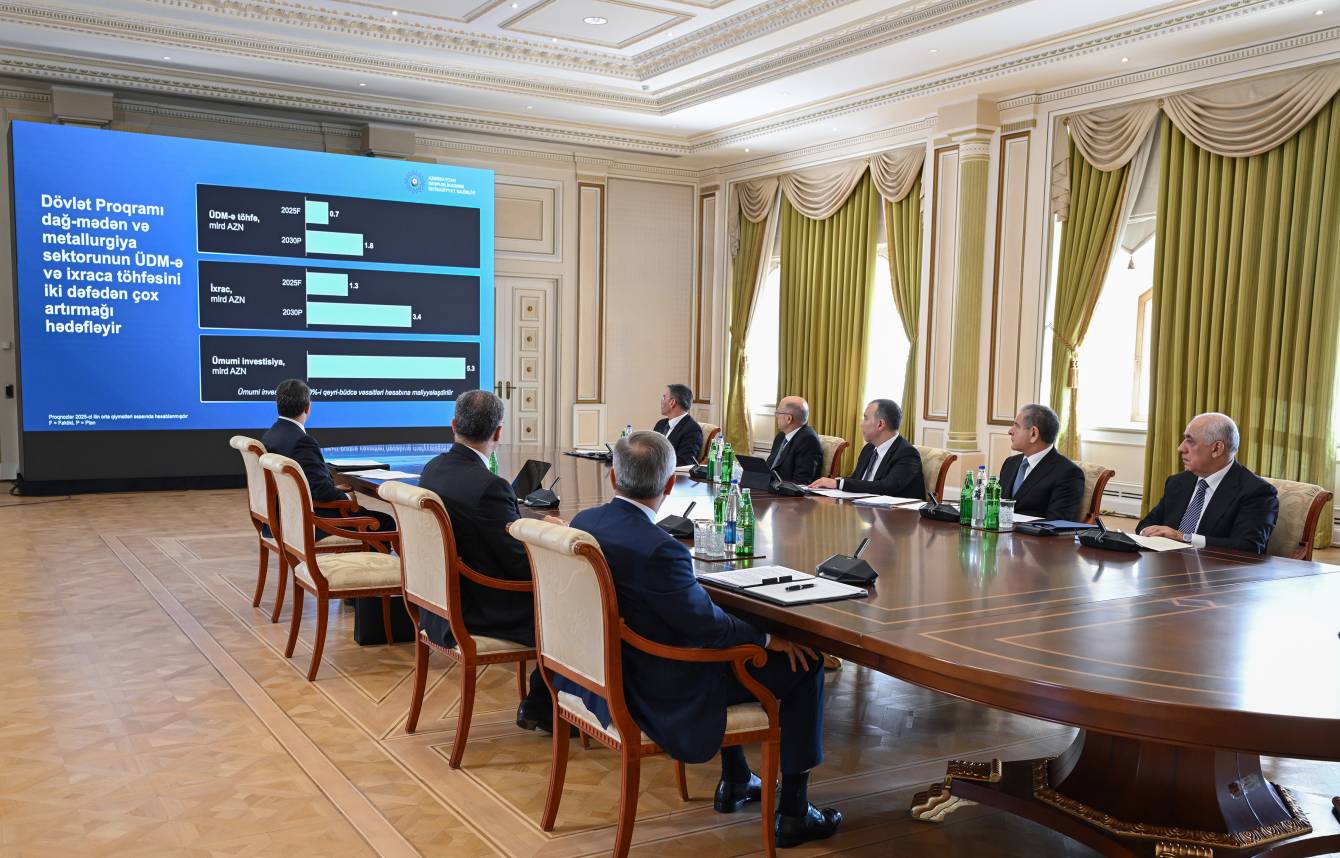
Regarding the development of the metallurgical industry: of course, the development of aluminum production is envisaged. Although there were proposals from certain foreign partners, their proposals did not materialize because we strive to implement mechanisms that yield real value for the national economy to the maximum extent. Therefore, I believe that we must develop this crucial industrial domain ourselves, and under the program to be adopted, aluminum production should be brought up to 100,000 tons. The timeline here, as I mentioned, is through the end of 2030. Here, too, several plants will be established, and details on this will now be presented to us.
I would like to touch upon one more issue. The financial backing of this program is clear, it has been agreed upon with all relevant entities, and we will execute this program in any case. However, if local and foreign investors show interest, their participation at a certain percentage level is also possible. Whether it happens or not, it is fine—we will accomplish this regardless. Nevertheless, I believe that while the sector is indeed capital-intensive, it is highly profitable. Particularly today, the prices of precious metals on world markets are quite high and will likely remain roughly around this level. Therefore, it is both capital-intensive and profitable. Our message to local and foreign investors is that the doors are open. The program will be published, outlining all the work to be carried out. Everyone can familiarize themselves with it. If it generates interest, we can also attract foreign investors.
In conclusion, what will this yield for us? As I noted, a new and powerful industrial sector will be established. Over 5,000—and perhaps even more—new jobs will be created. The development of liberated Garabagh and East Zangezur, along with the growth of employment there, will proceed at a faster pace. Substantial funds will flow into the state budget in the form of taxes, and a robust export potential will be created. It might be somewhat early to state this now, but the expected annual positive financial impact should exceed one billion manats. I do not wish to cite a final figure, but these are projects that can be measured on a scale of billions of manats.
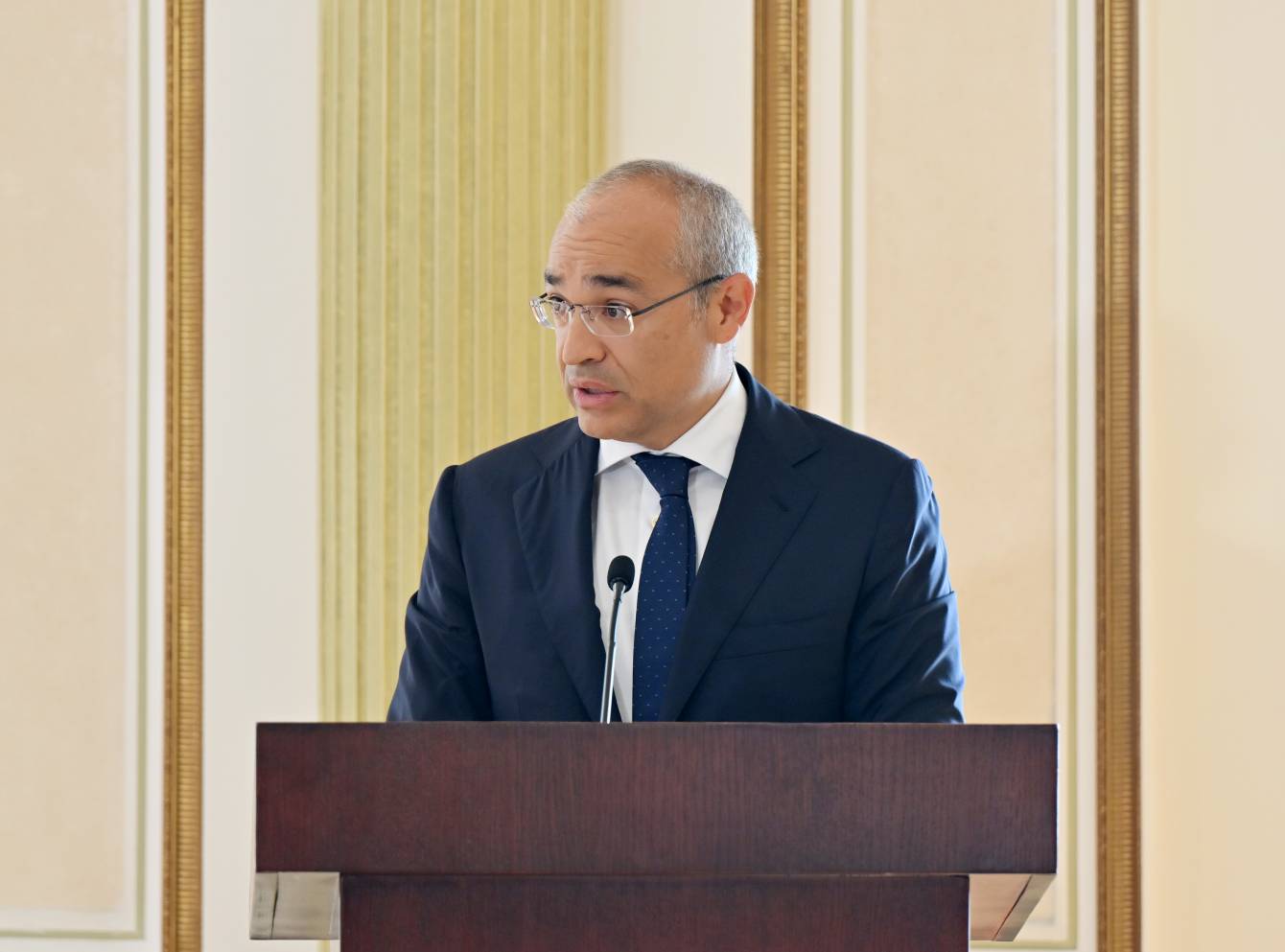
Now, let us proceed to the presentation of the program, and the floor is given to Minister of Economy Mikayil Jabbarov.
x x x
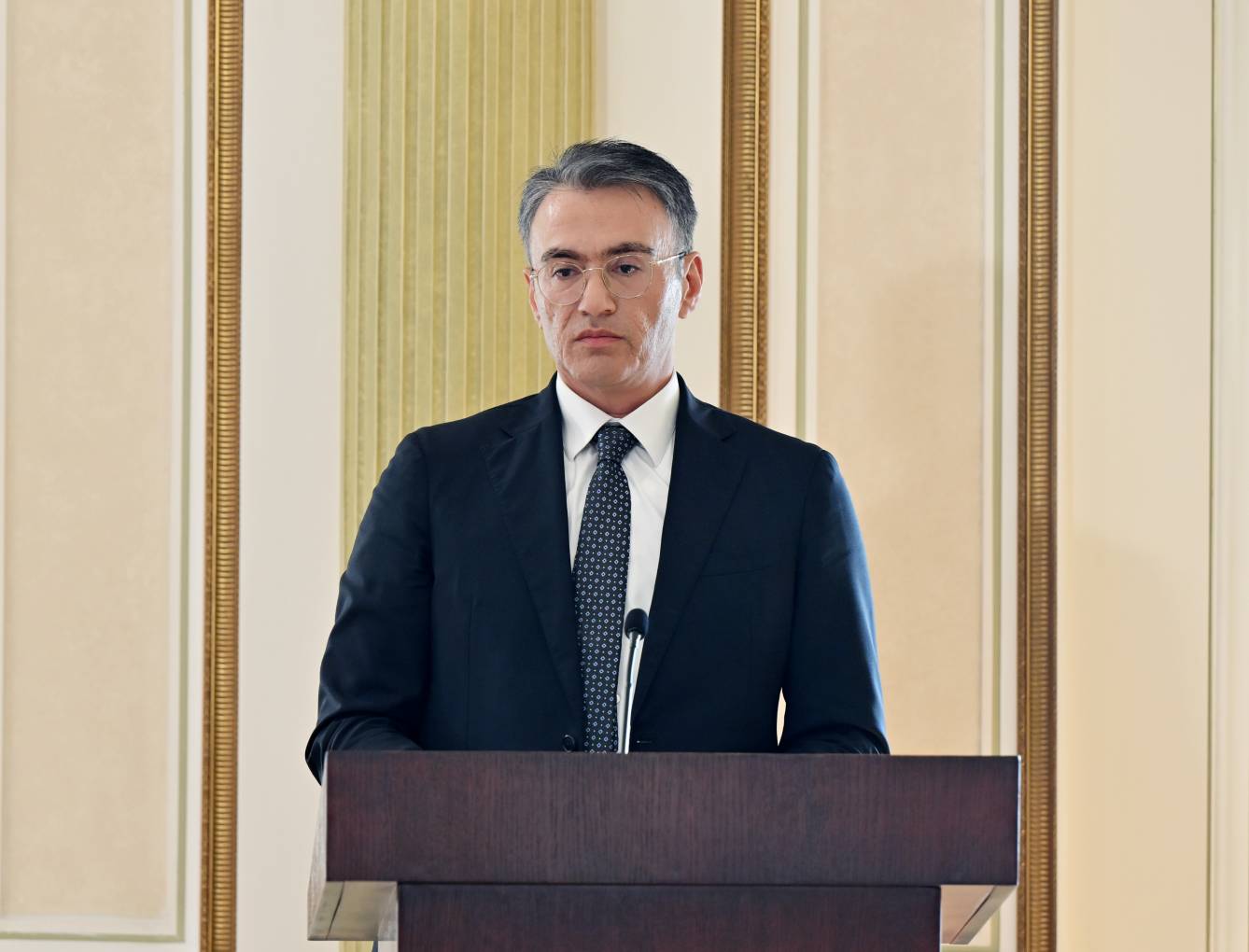
Mikayil Jabbarov, Minister of Economy, addressed the meeting.
x x x
Zakir Ibrahimov, Chairman of “AzerGold” Closed Joint-Stock Company, also addressed the event.
x x x
The meeting then continued with discussions.